

This website contains information intended solely for healthcare professionals. It is not meant for patients or the general public and should never replace professional medical advice, diagnosis, or treatment. Patients should not rely on this content for decisions about their health or medical care. If you are a patient and have questions about a CooperSurgical Genomics test or its implications, please contact your healthcare provider. Your provider can explain the benefits, risks, and limitations of the test and help determine whether it is appropriate for you.
PGT-SR
Detecting Chromosomal Rearrangement
Using our PGTaiSM technology, we perform PGT-SR for patients with high accuracy.
Our pioneering AI analysis is developed with real outcome data and uses two independent analyses (CNV & SNP) to identify unbalanced chromosomal rearrangements, providing full confidence in robust and accurate results.
Chromosomal rearrangements are changes from the normal size or arrangement of chromosomes, which are the structures that hold our genetic material. People with chromosome rearrangements are at an increased risk of producing embryos with the incorrect amount of genetic material, which typically do not lead to a successful pregnancy.
For people with a chromosomal rearrangement, PGT-SR, or preimplantation genetic testing for chromosomal structural rearrangements, can be performed to improve the chance of establishing a healthy pregnancy. PGT-SR involves testing embryos created through in vitro fertilization (IVF) and then transferring only normal embryos. PGT-SR was formerly known as PGD, preimplantation genetic diagnosis.
Availability
This product is available for sale in selected countries around the world.


We can identify abnormalities with 2–3 times greater resolution than most available tests. 1
Who It Is For
PGT-SR is appropriate for people who have a chromosome rearrangement, and thus are at risk of creating embryos with the incorrect chromosome number or structure. You may consider PGT-SR for chromosome rearrangements if you had a child or pregnancy with a chromosome rearrangement or if you or your partner are a carrier of an:
- Inversion
- Reciprocal translocation
- Robertsonian translocation
How It Works
Chromosome rearrangements can be inherited or can happen spontaneously. Many carriers of balanced chromosome rearrangements are healthy and are unaware of their carrier status until they try to have children.
Carriers of balanced rearrangements are at risk for producing embryos with the incorrect amount of chromosomal material, which typically do not lead to a successful pregnancy. PGT-SR can help identify embryos with the correct amount of chromosomal material that are most likely to lead to a successful pregnancy and healthy live birth. The three primary types of rearrangements we test for are: reciprocal translocations, Robertsonian translocations, and inversions.
Reciprocal Translocations
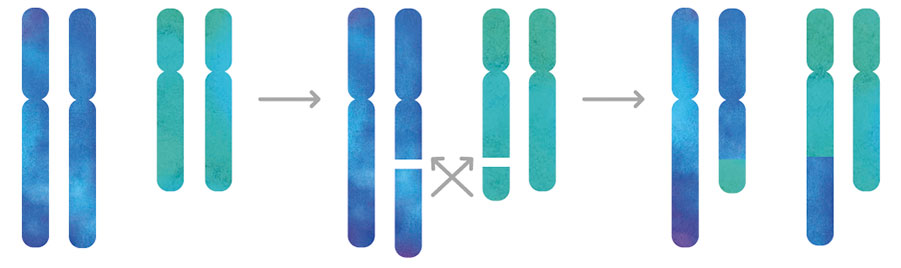
Reciprocal translocations occur when pieces of genetic material break off from two different chromosomes and swap places. People that carry a balanced translocation can create embryos that have either the same balanced translocation, the unbalanced form of the translocation (where there is a gain or loss of chromosomal material), or a completely normal set of chromosomes.
If one parent is a carrier of a reciprocal translocation, about 80% of resulting embryos will contain an incorrect amount of genetic material.
Robertsonian Translocations
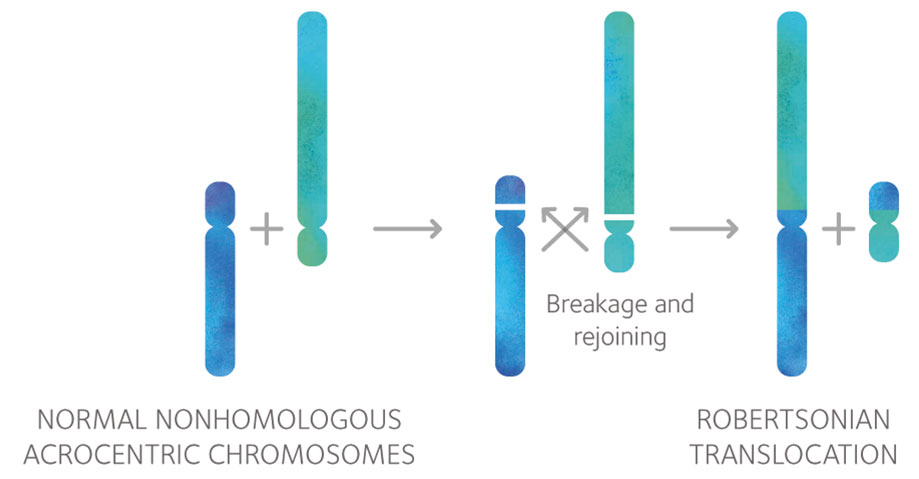
Robertsonian translocations occur when two chromosomes join together to form one large chromosome, giving an overall chromosome count of 45 instead of 46. This pairing occurs most commonly between chromosome numbers 13/14 and 14/21, and usually results in conditions such as Translocation Down syndrome, trisomy 13, or uniparental disomy (UPD).
Inversions
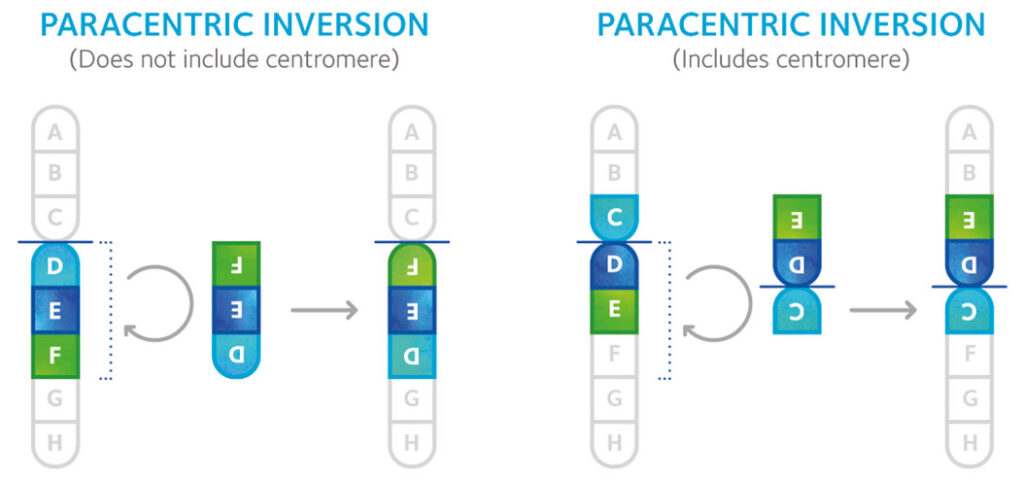
Inversions are chromosome rearrangements that involve only one chromosome. In an inversion, a segment of a chromosome is flipped and reinserted upside down. People with an inversion may create embryos with missing or duplicated segments of chromosomes.
Brochures, Catalogs & Flyers
Reproductive Genetic Testing Brochure
Reproductive Genetic Testing Brochure
PGT-Complete Brochure
PGT-Complete Brochure
PGT-A Patient Brochure
PGT-A Patient Brochure
PGT-A Clinician Brochure
PGT-A Clinician Brochure
- Internal CSI data 2022.
PGT-SR (Preimplantation Genetic Testing for Structural Rearrangements) is a genetic test intended only as a screening tool and is designed to check for chromosome imbalances resulting from a gamete contributor’s known chromosomal rearrangement, such as a translocation or an inversion. PGT-SR testing also includes PGT-A screening for gains and/or losses of chromosomes and genetic material beyond those associated with the known familial rearrangement. These are not diagnostic tests, they cannot detect every chromosome or DNA abnormality, and they cannot determine whether an embryo will implant, result in a successful pregnancy, or lead to the birth of a healthy child. Healthcare providers should review the test’s indications, limitations, and potential risks and discuss these with their patients to determine whether the test is appropriate for the patient’s individual circumstances. This test only looks for unbalanced chromosome changes related to the known rearrangement and for chromosome abnormalities not related to the known rearrangement within the limitations of the PGT-A technology. This testing cannot detect every chromosome abnormality or DNA abnormality, and a normal/balanced result does not ensure a successful pregnancy. Genetic testing cannot guarantee pregnancy or the birth of a healthy child. Confirmatory prenatal testing during pregnancy is recommended.
Get In Touch With Us
We’d love to hear from you. How can we help?