

PGT‑A (Preimplantation Genetic Testing for Aneuploidy) is a genetic test intended only as a screening tool and is designed to identify whether an embryo has the expected number of chromosomes. It is not a diagnostic test, it cannot detect every chromosome abnormality or DNA abnormality, and it cannot determine whether an embryo will implant, result in a successful pregnancy, or lead to the birth of a healthy child. Genetic testing is complex and continually evolving, therefore it is recommended that you speak with your healthcare provider to understand if this testing is appropriate for you.
Right Embryo
Unique innovation to improve the odds of pregnancy and IVF success

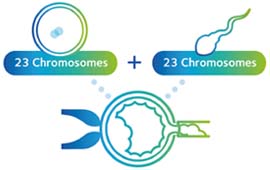
How the PGT-A process works
1.
Several cells are collected from your embryo while it remains in the care of your IVF center

2.
The cells from your embryo undergo analysis at one of our PGT-A testing laboratories

3.
A PGT-A report is sent to your clinician

4.
Based on the PGT-A report results your clinician will help guide your transfer decision
Is PGT-A testing for me?
PGT-A can benefit many IVF patients. Research has shown PGT-A can:

Increase the chance of implantation and pregnancy2

Reduce the risk of miscarriage2

Reduce the potential emotional, physical and financial impact of multiple IVF cycles
” We wanted to have the best chance to avoid transferring embryos that could lead to miscarriage or severe birth defects. Each failed transfer would have had a significant financial impact. “
Caitie (A CooperSurgical PGT-A patient)
To read Caitie’s story click here
What does the PGT-A data tell us?
The number of euploid embryos decreases with age
All patients are at risk of producing aneuploid embryos. As women age, the potential for aneuploid embryos increases. PGT-A can help all families increase their chances of a successful pregnancy.
A retrospective study that investigated 2,464 IVF cycles showed PGT-A significantly improves the live birth rate for patients of all ages.³
Live births are increased across all age groups with PGT-A versus non-PGT-A users.
Live births are increased across all age groups with PGT-A versus non-PGT-A users
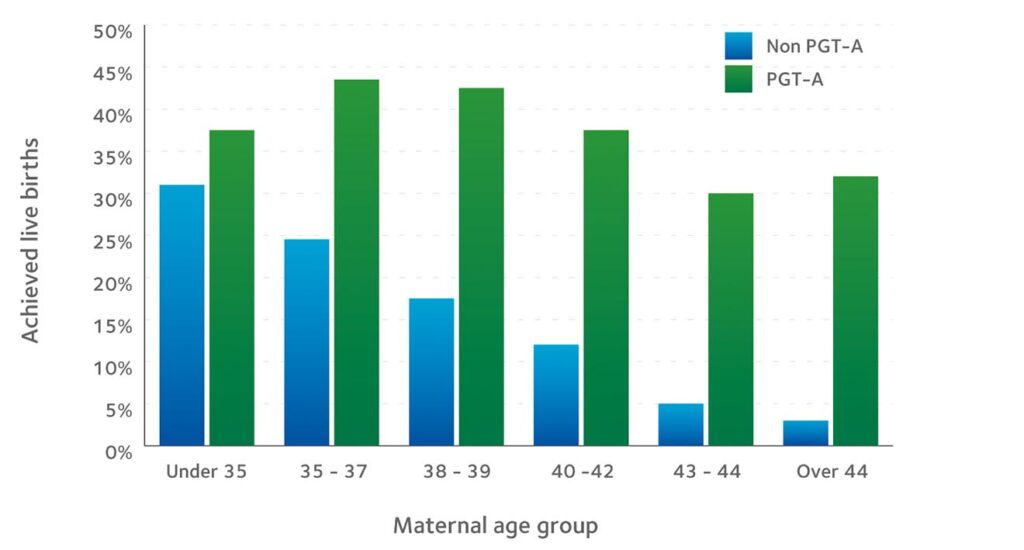
Percentage of live births per embryo transferred with and without PGT-A. Data reached statistical significance.
How is our PGT-A test different?
CooperSurgical uses artificial intelligence (PGTaiSM test) to analyze your embryo data
How our test works
Our artificial intelligence platform is based on thousands of embryos that resulted in healthy live births. This means the chromosomal status of your embryo is checked against the data taken from these embryos, improving the accuracy of our test.
How PGTaiSM test benefits you compared to other PGT-A technology
- Has been shown to increase ongoing pregnancy and live birth rates2
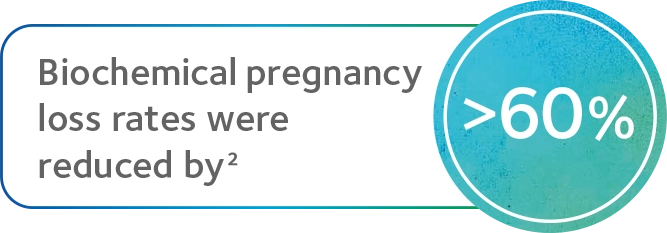
- Biochemical pregnancy loss rates and spontaneous abortion reduced2
- More euploid embryos available for transfer4

Improving patient outcomes
PGTaiSM test significantly increases ongoing pregnancy and live birth rates.
A study investigated outcomes from almost 25,000 IVF embryos using our PGTai technology compared to standard technology (without AI).2

” We chose to have PGT-A testing with CooperSurgical to find out more about our embryos and to be able to make a better decision with all the information possible.“
Rumman (A CooperSurgical PGT-A patient)
To read Rumman’s story click here
References
2. Buldo-Licciardi et al. 2023. Utilization of standardized preimplantation genetic testing for aneuploidy (PGT-A) via artificial intelligence (AI) technology is correlated with improved pregnancy outcomes in single thawed euploid embryo transfer (STEET) cycles. Journal of Assisted Reproduction and Genetics, 40(2), pp.289-299.
3. Sanders et al. 2021. Analysis of IVF live birth outcomes with and without preimplantation genetic testing for aneuploidy (PGT-A): UK Human Fertilisation and Embryology Authority data collection 2016–2018. Journal of Assisted Reproduction and Genetics, 38, pp.3277-3285.
4. CooperSurgical Internal Data
CooperSurgicals’ PGT-A test includes a Genetic PN (pronuclei) Check, which is an additional genetic analysis that helps support evaluation of whether fertilization occurred in a typical manner. This test is intended to provide supportive information only and does not confirm embryo viability, health, or likelihood of pregnancy.
Both PGT-A and Genetic PN (pronuclear) Check have technical and biological limitations and should be interpreted with your healthcare provider. Genetic testing cannot guarantee pregnancy or the birth of a healthy child. Decisions regarding embryo transfer, pregnancy management, or medical care should always be made in consultation with a qualified healthcare professional.